System Design
Chapter 24
Replication and sharding
One database eventually runs out of room, either for traffic or for data. Two techniques fix the two different problems. Replication makes copies for safety and read speed. Sharding splits the data so writes and storage spread across many machines. They solve different things and are often used together.
Replication Primary takes writes copy copy Replica Replica serves reads serves reads Sharding Shard A users A to H Router by shard key Shard B users I to P Shard C users Q to Z Replication copies the same data for safety and read scale. Sharding splits different data for write scale.
Replication
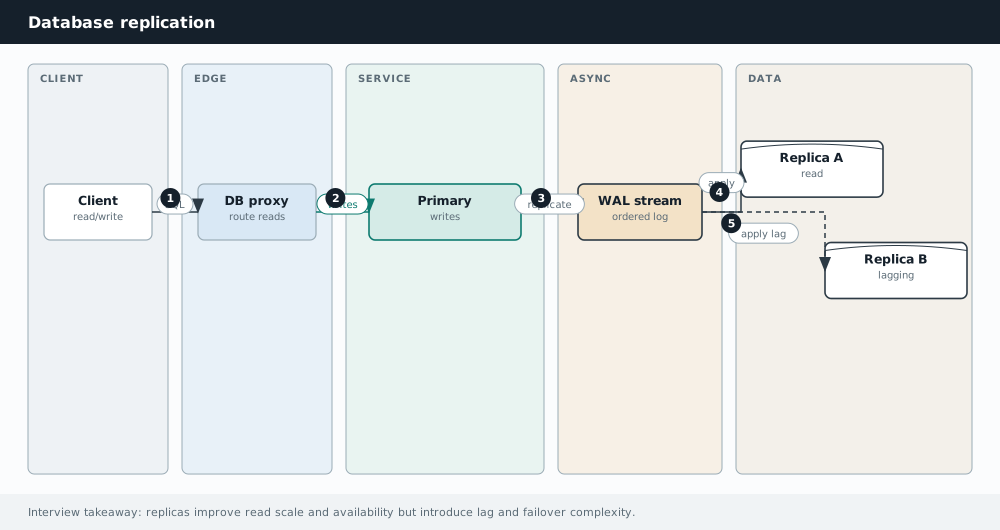
Replication keeps copies of the same data on several machines. The common setup is one primary that takes all the writes and several replicas that copy from it and serve reads. This gives you two wins: if the primary dies, a replica can take over, and read heavy traffic spreads across many replicas.
The catch is how the copy happens. Asynchronous replication is fast because the primary does not wait for replicas, but a crash can lose the most recent writes that had not copied yet. Synchronous
replication waits for replicas to confirm, so nothing is lost, but every write is slower. Most systems pick a spot on that spectrum based on how much they fear losing a few seconds of data.
PROS CONS Survives a machine failure with a replica Writes still funnel through a single ready to take over primary Read traffic scales across many replicas Replicas can lag, so reads may be slightly stale Replicas can sit closer to users in other regions Failover and promoting a new primary is fiddly
Sharding, also called partitioning
Sharding splits the data itself so different machines hold different rows. You pick a shard key, like user id, and route each record to a shard based on it. Range based sharding groups by ranges of the key, which is simple but can create hotspots. Hash based sharding spreads keys evenly by hashing them. Consistent hashing is the refinement that lets you add or remove a machine while moving only a small slice of the data instead of reshuffling everything.
PROS CONS Write throughput and storage scale Queries that span shards are slow and nearly without limit awkward Each shard is smaller, so its own A bad shard key creates hotspots that operations stay fast ruin the balance Consistent hashing keeps rebalancing Transactions across shards are hard or cheap impossible More machines means more operational overhead
T H E S H A R D K E Y I S E V E R Y T H I N G
Choose a shard key that spreads load evenly and matches how you query. If most requests hit one popular key, that shard becomes a hotspot and you are back to a single overloaded machine. Picking this well is one of the highest stakes decisions in a sharded design.
Going Deeper
Consistent hashing, and choosing a new leader
Plain hashing across N machines has a nasty flaw: change N and almost every key moves to a different machine. Consistent hashing fixes this by placing both nodes and keys on a ring, where each key belongs to the next node clockwise. Add or remove a node and only the keys between it and its neighbor move, a small slice instead of the whole dataset. For replication, when the primary dies the replicas run a leader election to promote a new primary and clients are redirected to it. The subtle part is doing this without two nodes both believing they are the primary, which would corrupt data.
A key -> next node clockwise Adding or removing a node moves only the slice of keys between it and its neighbor, not everything.
C B keys and nodes share one ring Consistent hashing places nodes and keys on a ring, so changing the node count reshuffles only a small slice.
PROS CONS Async replication is fast, since the Async can lose the last few writes if the primary does not wait for replicas primary crashes Reads scale across many replicas Sync replication is safe but makes every placed near users write slower